Generating a Template from a Reference Manual
A Template can be created automatically from a Reference Manual that has been uploaded in the Enterprise.
You can even update a Template with the Hits detected between two versions of a Reference Manual.
Important
You can only generate a Template from the following Technical Publications:
SPM (Standard Practices Manual)
ESM (Engine Shop Manual)
AMM (Aircraft Maintenance Manual)
SB (Service Bulletin)
CIR (Cleaning, Inspection and Repair)
Template generation is supported for all Reference Manual formats except PDF format.
In a Reference Manual, you can generate a Template from the following elements:
Page block
Task
Subtask
You can also generate Templates from Sub-elements. Following are some examples of Sub-elements:
Job Set-Up
Procedure
Closing
The Sub-elements can vary from one manual to another.
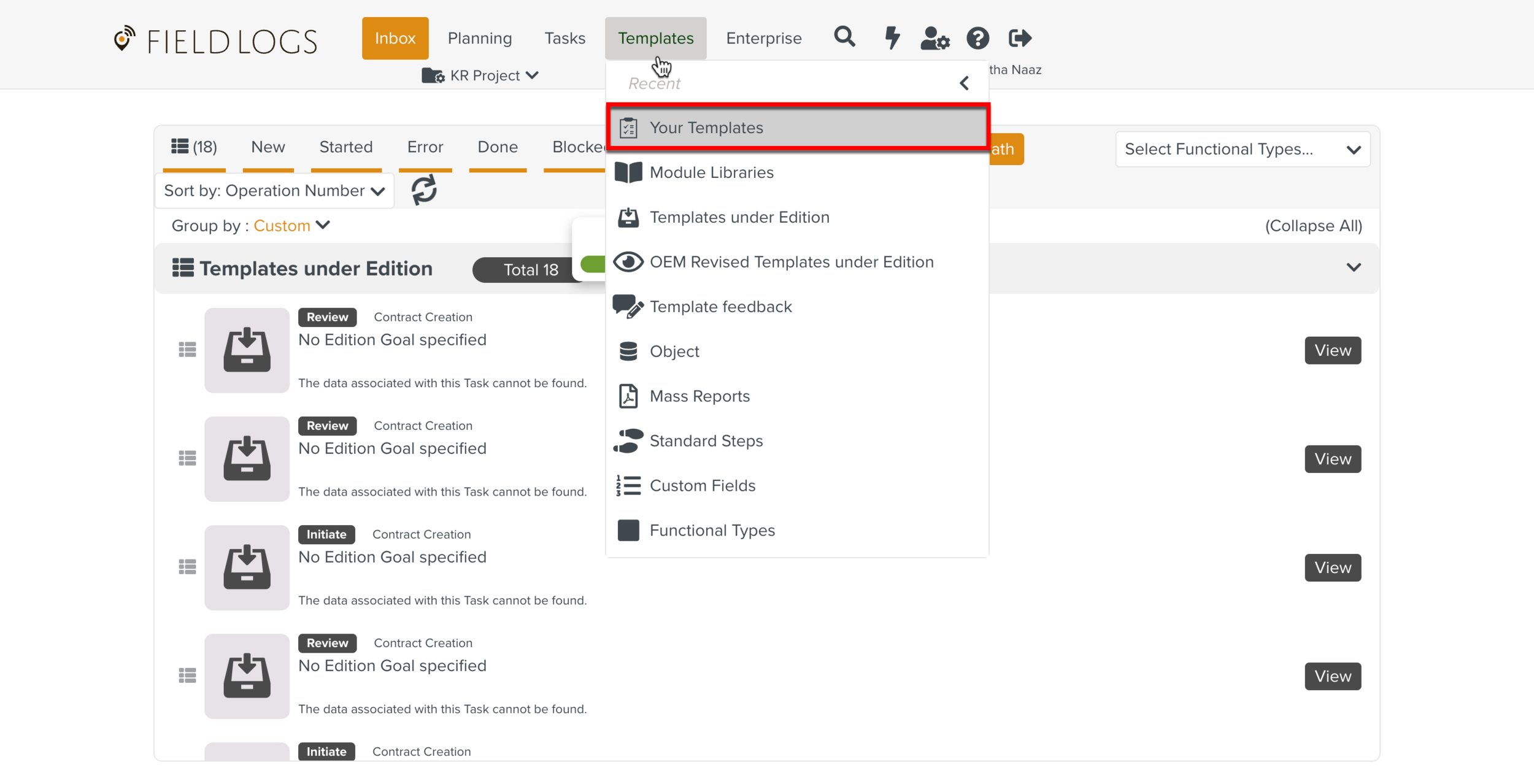
From the main menu, go to Templates > Your Templates.
From the property pane, navigate to the tab as shown below.
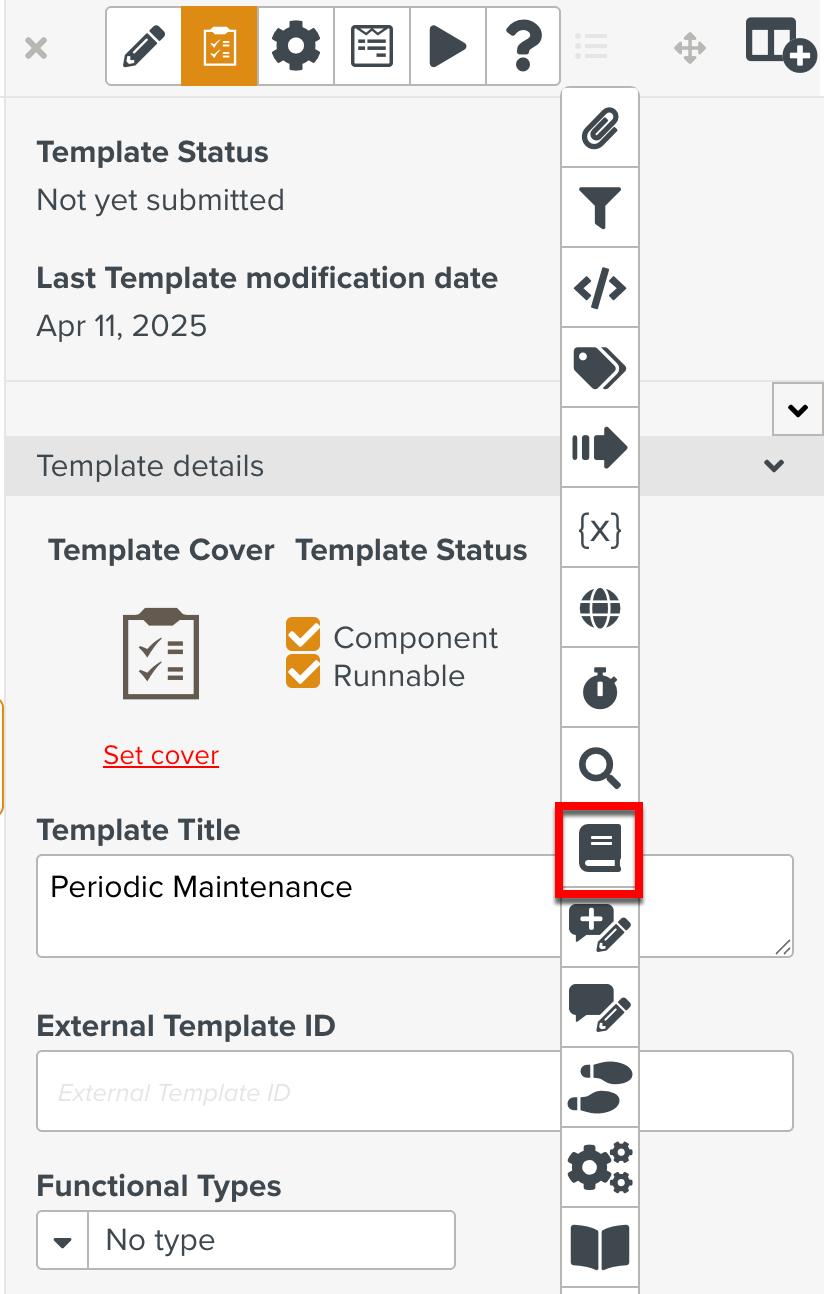
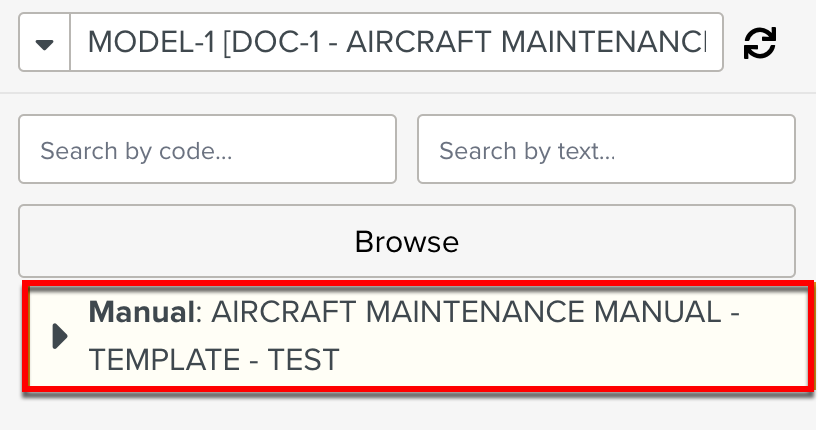
The tab opens.
Select a Reference Manual.
Important
The Reference Manual can also be filtered using text search.
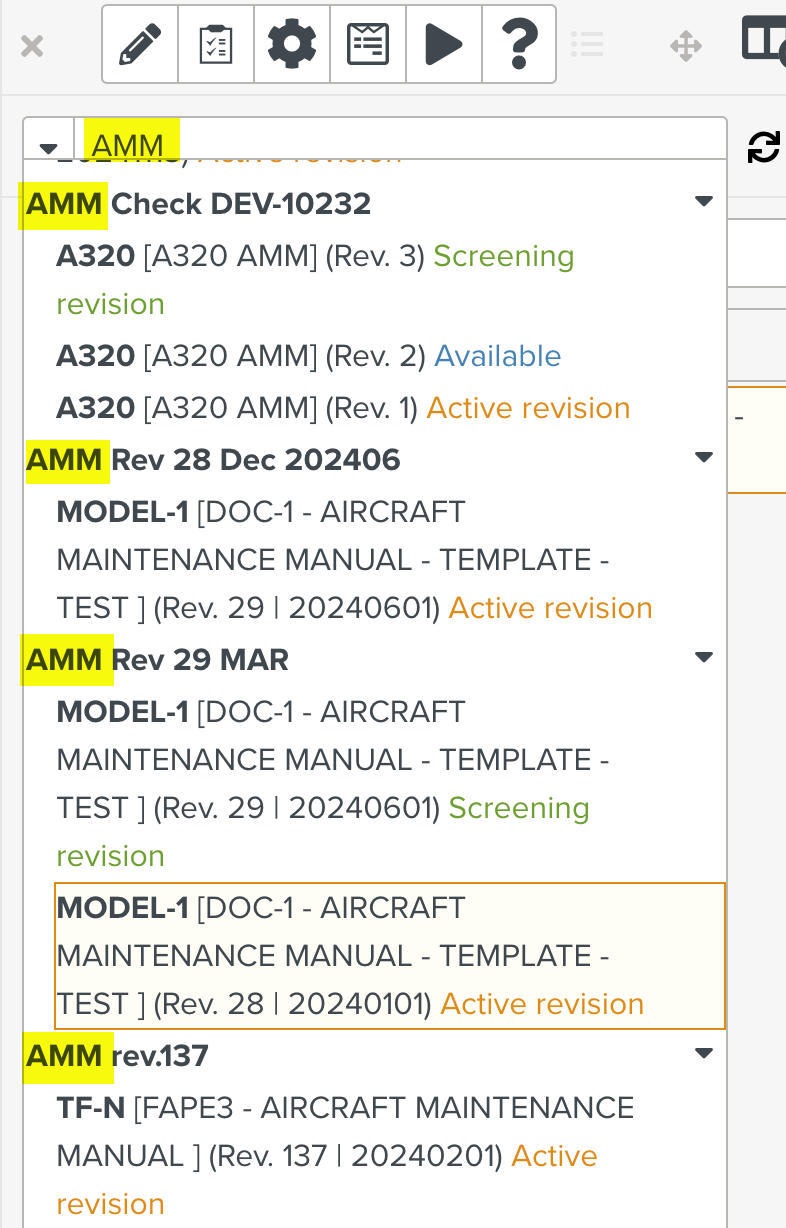
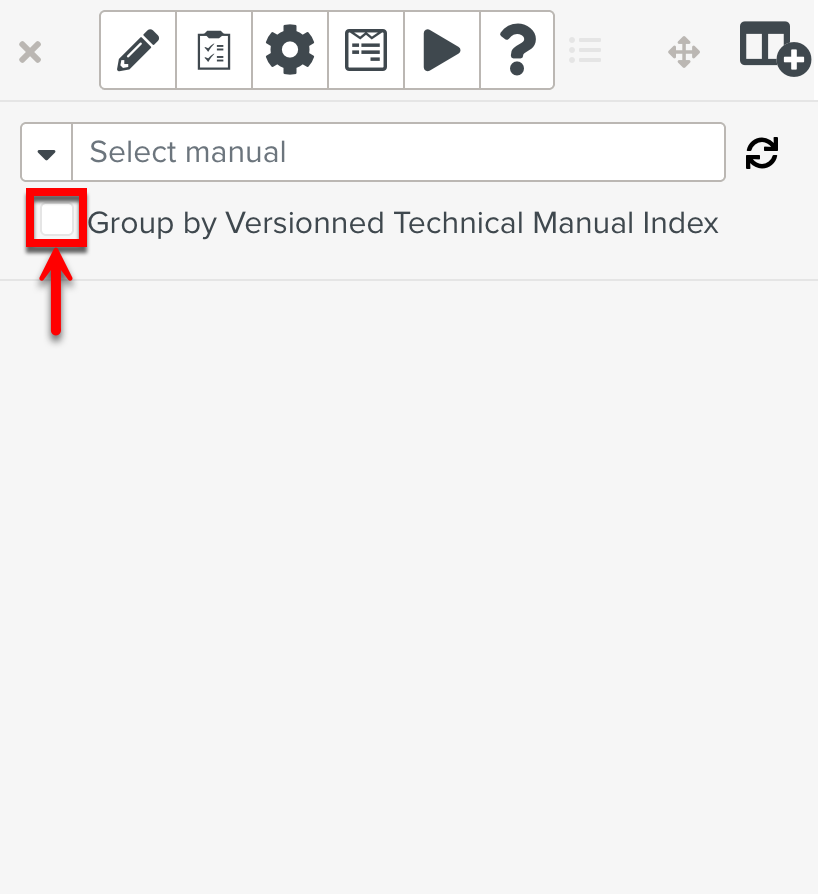
To view the manual revisions grouped under the versioned TMIs, select the Group by Versioned Technical Manual Index checkbox.
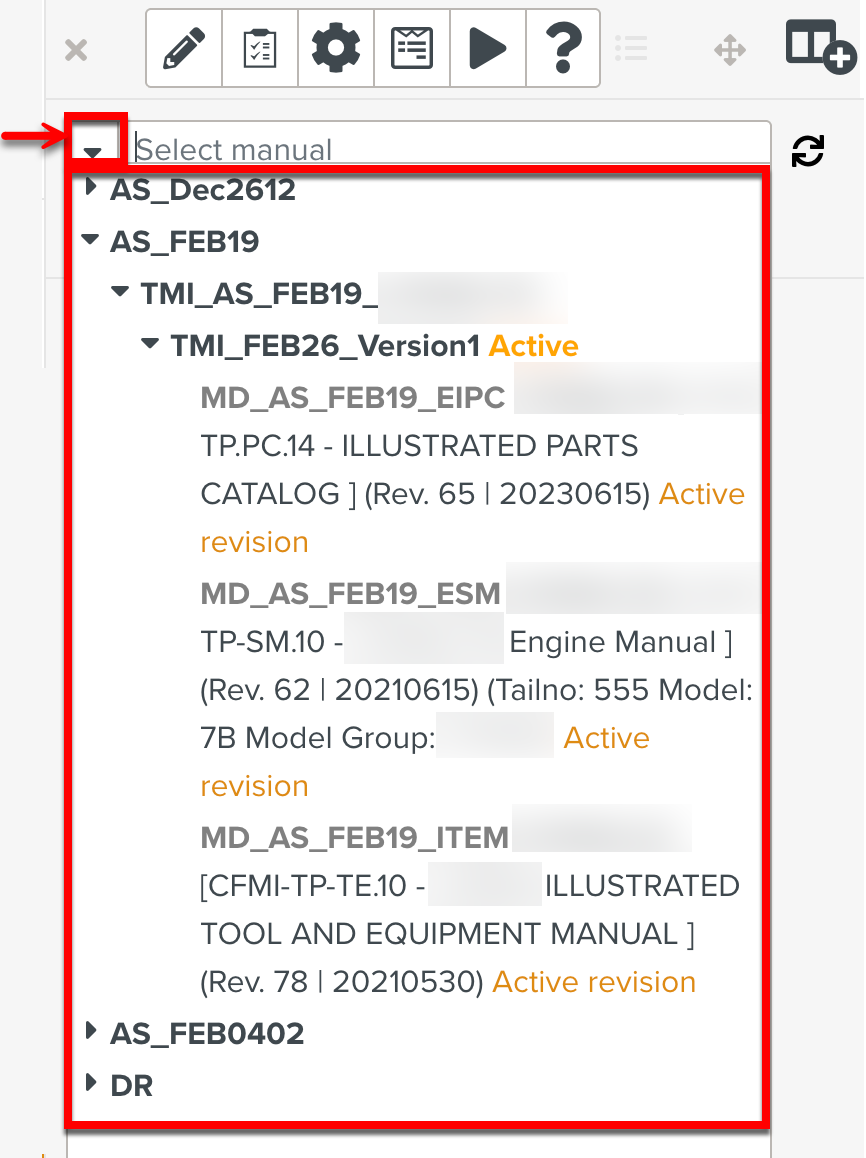
Expand the structure of the Reference Manual.
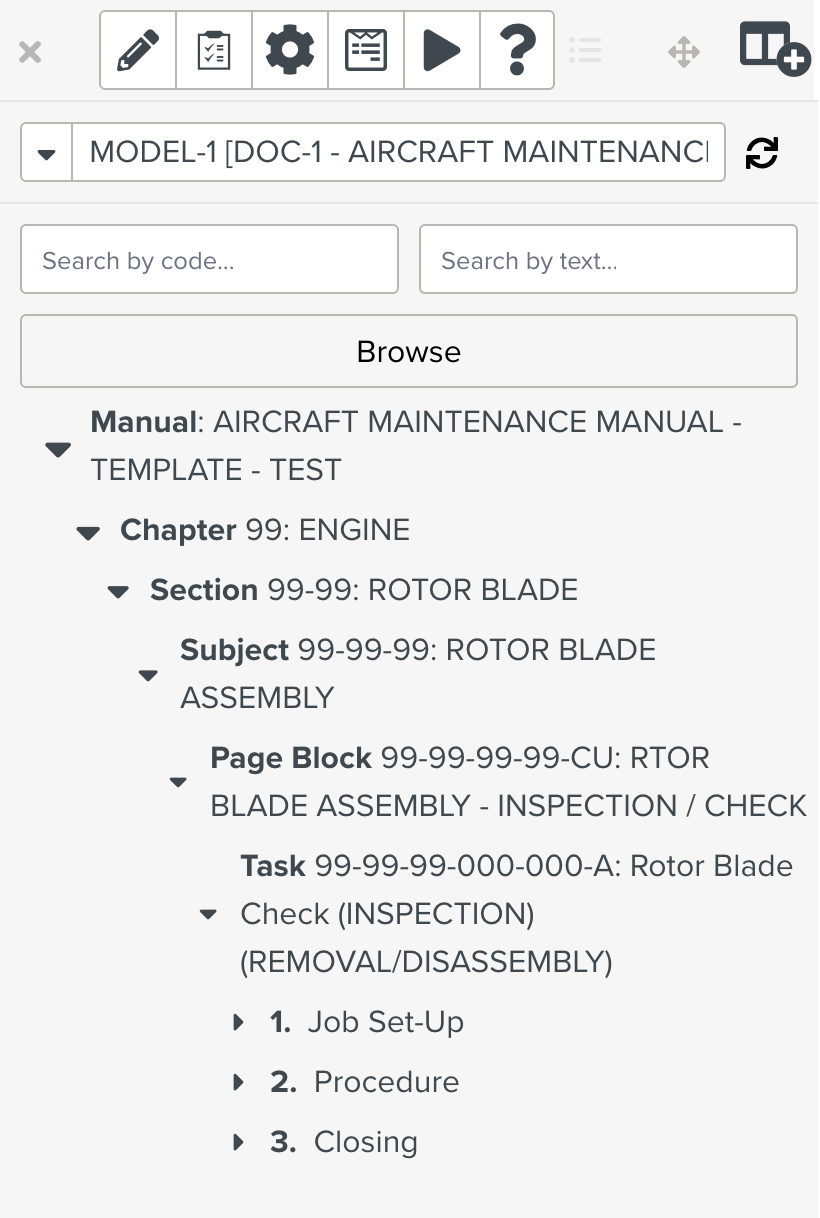
You can search for the required element or sub-element of the Reference Manual using the following options:
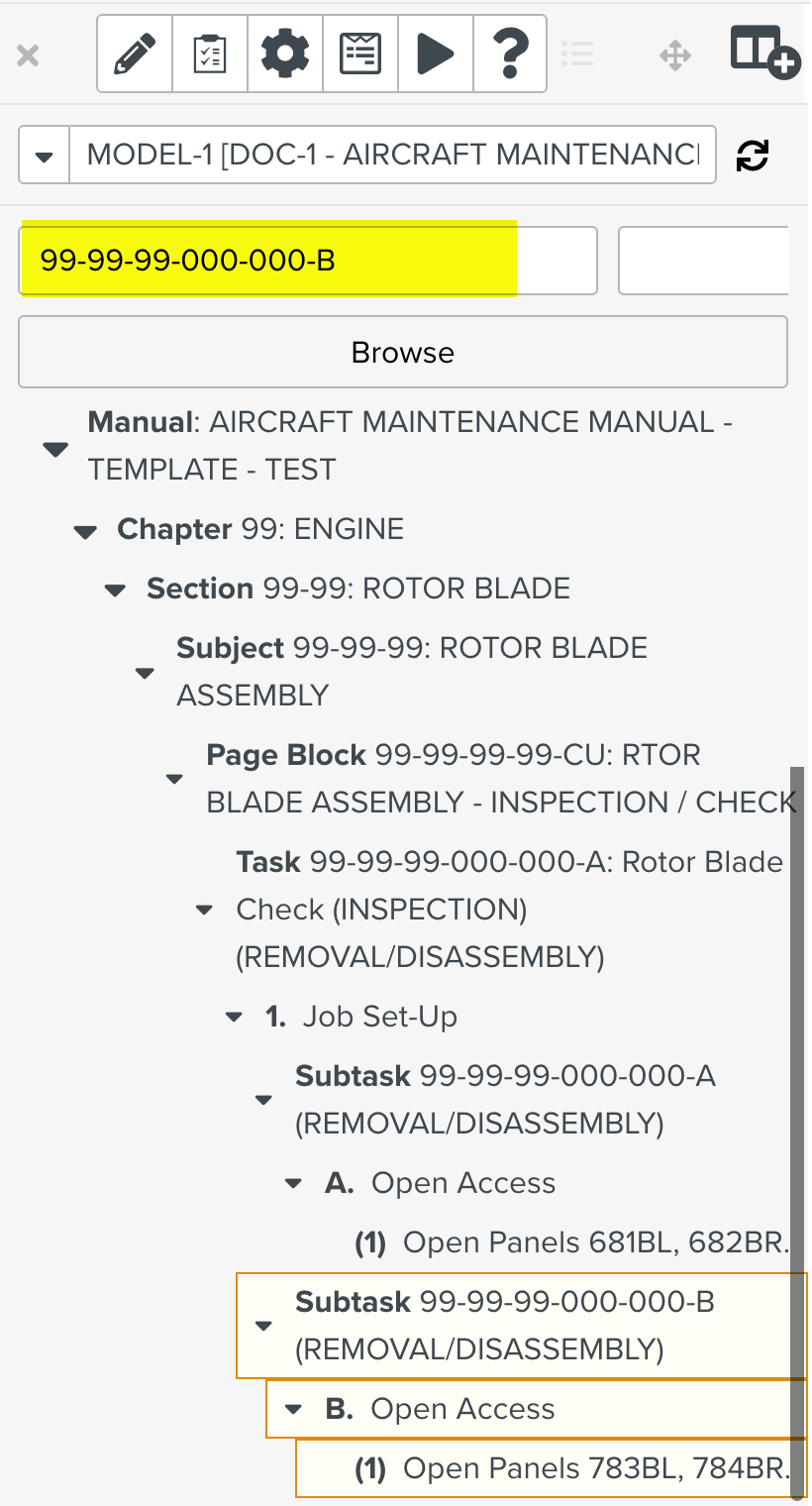
Search by code: Allows you to search the Reference Manual content using the Public key of the elements.
Note
Partial keyword search of Public key will also provide one or more relevant results.
Search by text: Allows you to search the Reference Manual content using keywords.
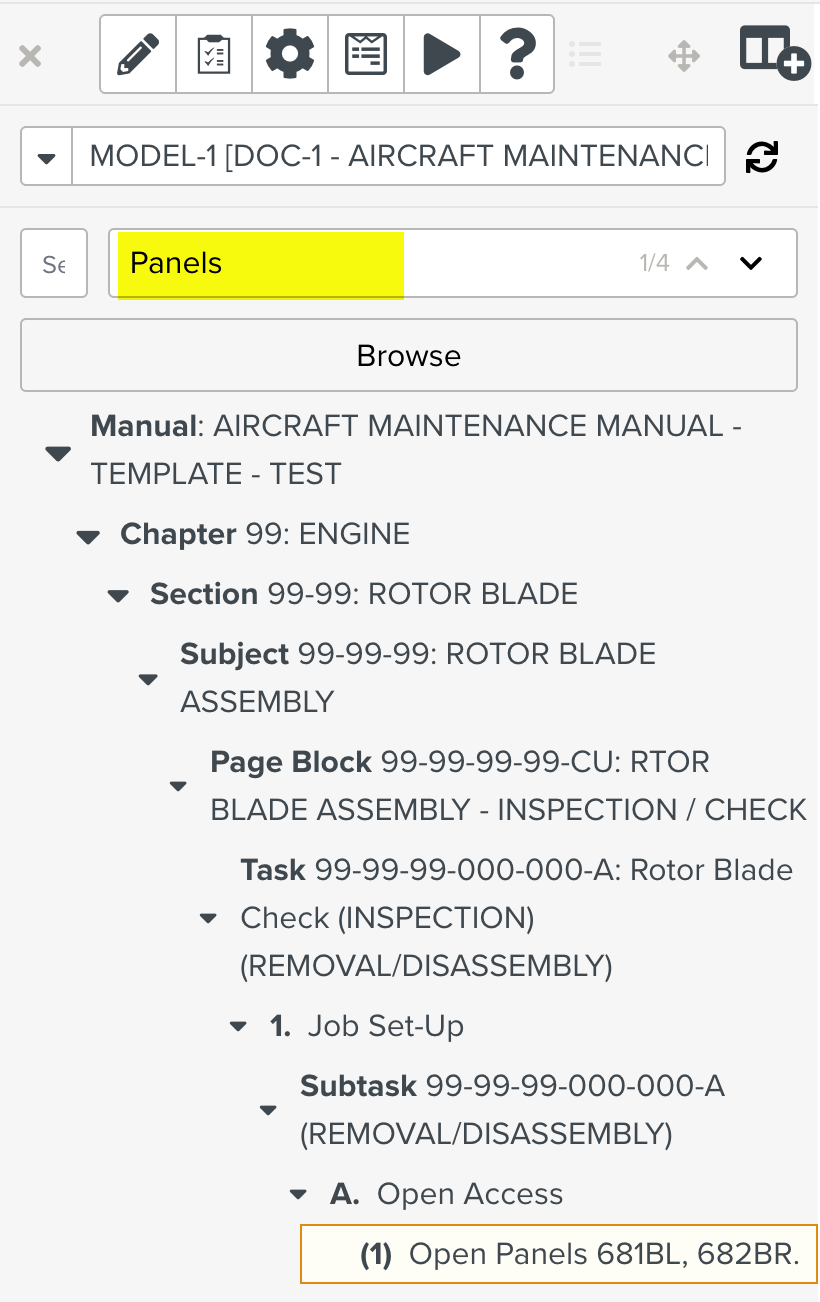
The search highlights the relevant content of the Reference Manual.
Right click any of the elements - Page block, Task, Subtask, Job Set-up, Procedure and Closing. If required, you can select multiple elements or sub-elements using command + click.
In the below example Job Set-up, Procedure, and Closing are some sub-elements.
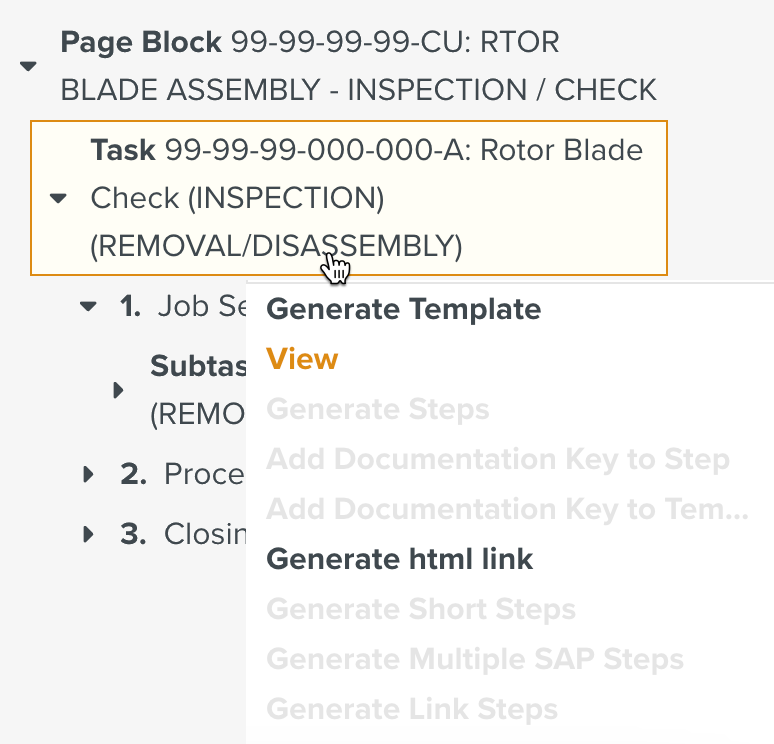
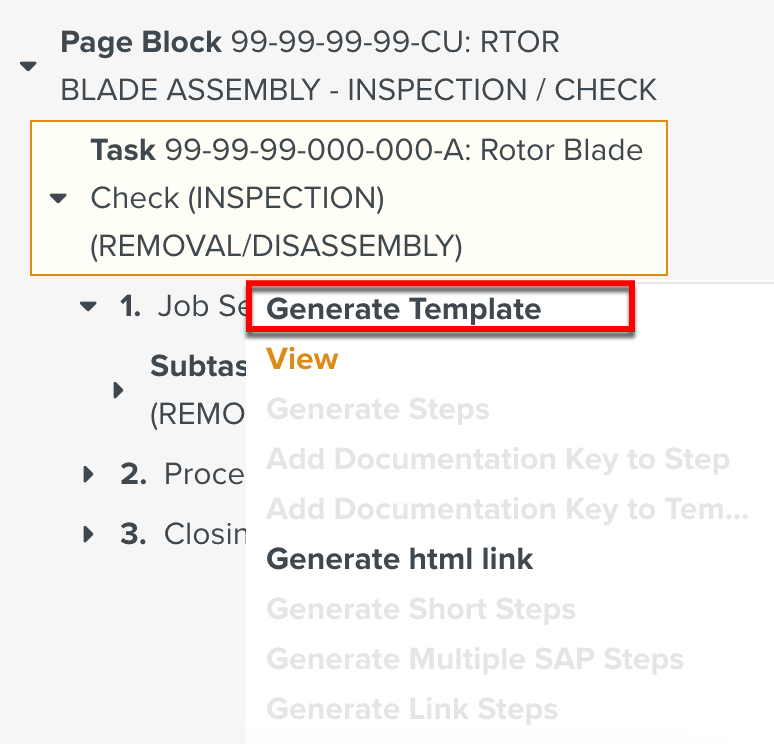
Click .
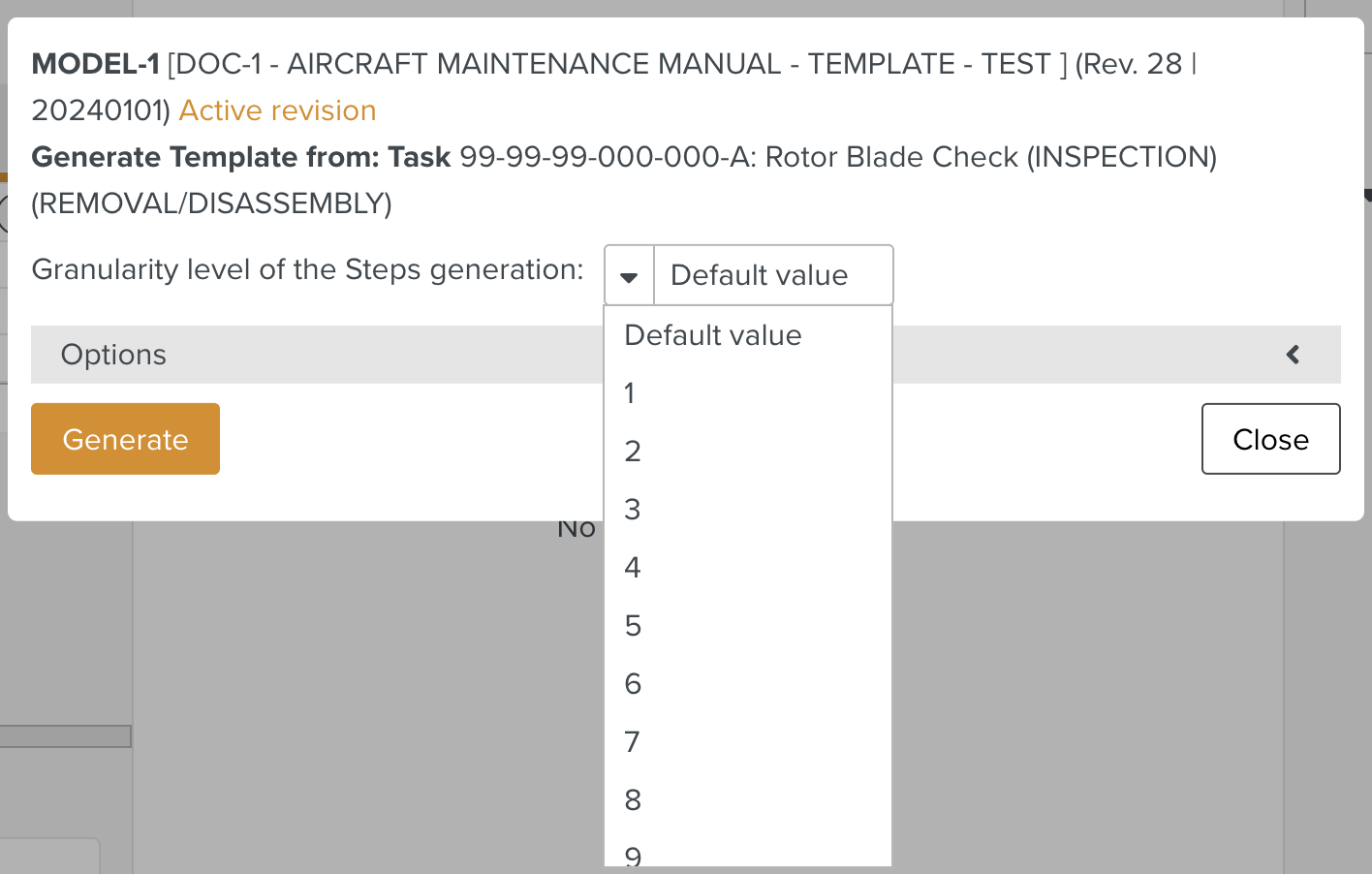
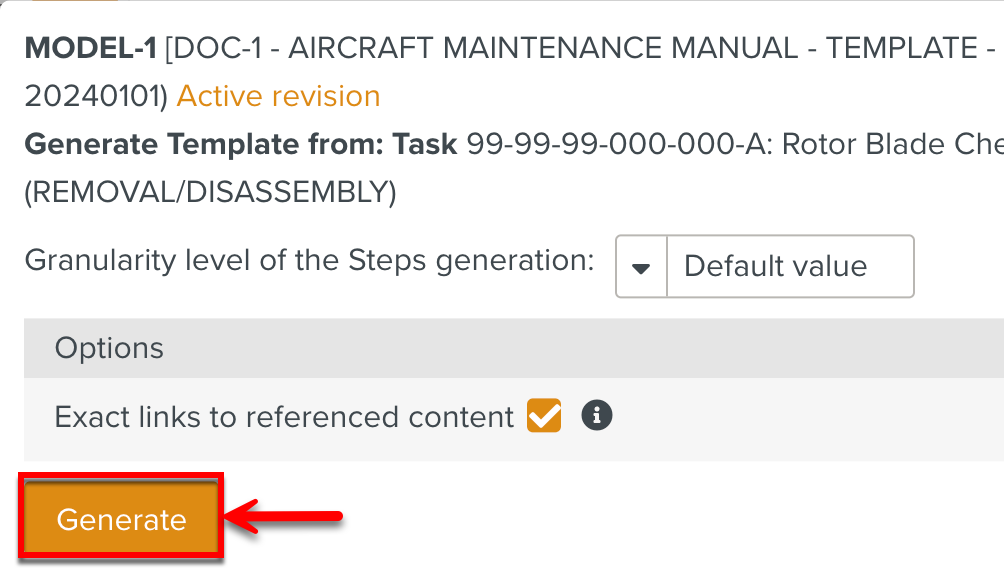
A dialog appears displaying the details of the selected Reference Manual, element or sub-element details, and other custom options for the Template.
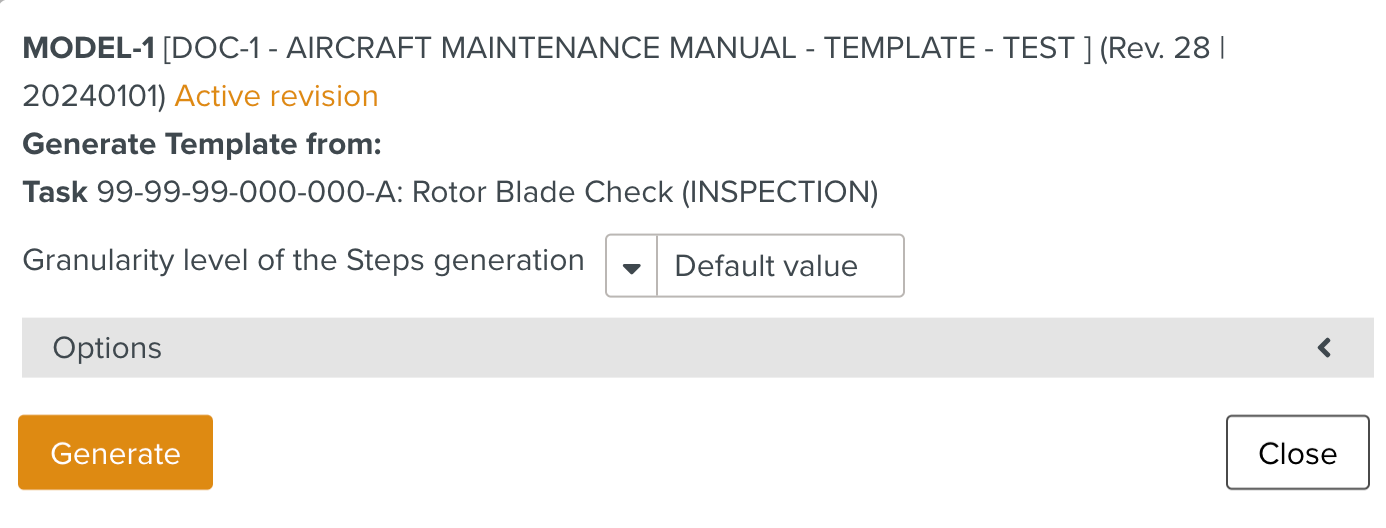
[Optional] Select a level of granularity for the Steps.
Important
The Default value of granularity can be set from Enterprise settings.
Note
The granularity level defines the maximum number of sub-levels that the system will generate.
If the Reference Manual contains more levels of steps than the value defined here, the content of the child Steps belonging to the inner levels merge with the parent Step at the same level as the granularity level set.
For example, if you select a granularity level of 3 and the Reference Manual contains 5 levels of Steps, the child Steps of level 4 and 5 are merged with the parent Step at level 3 in the Template.
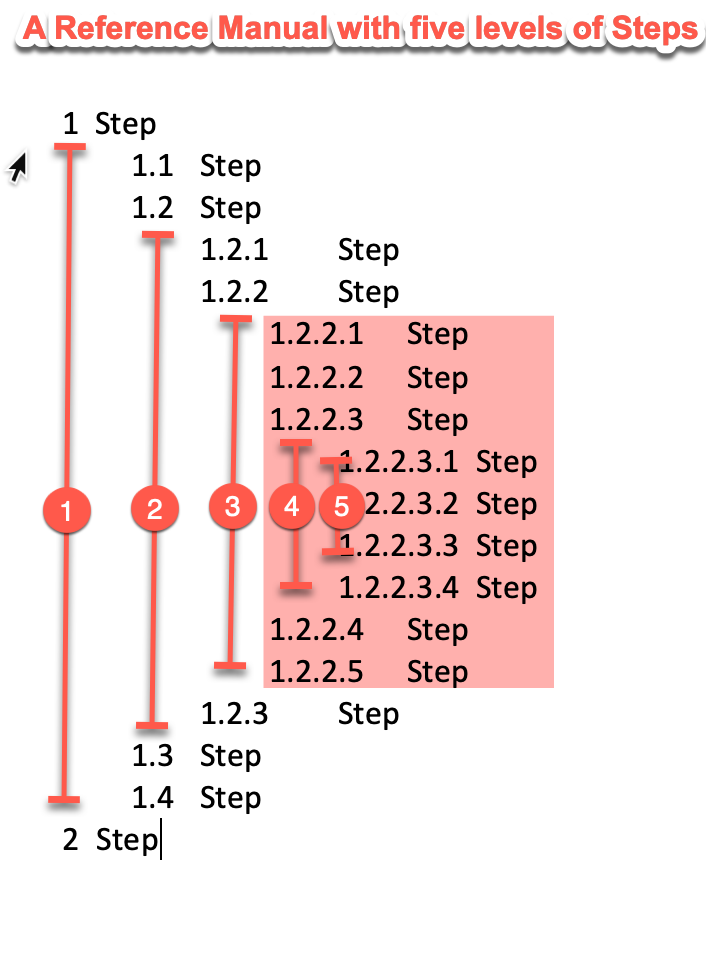
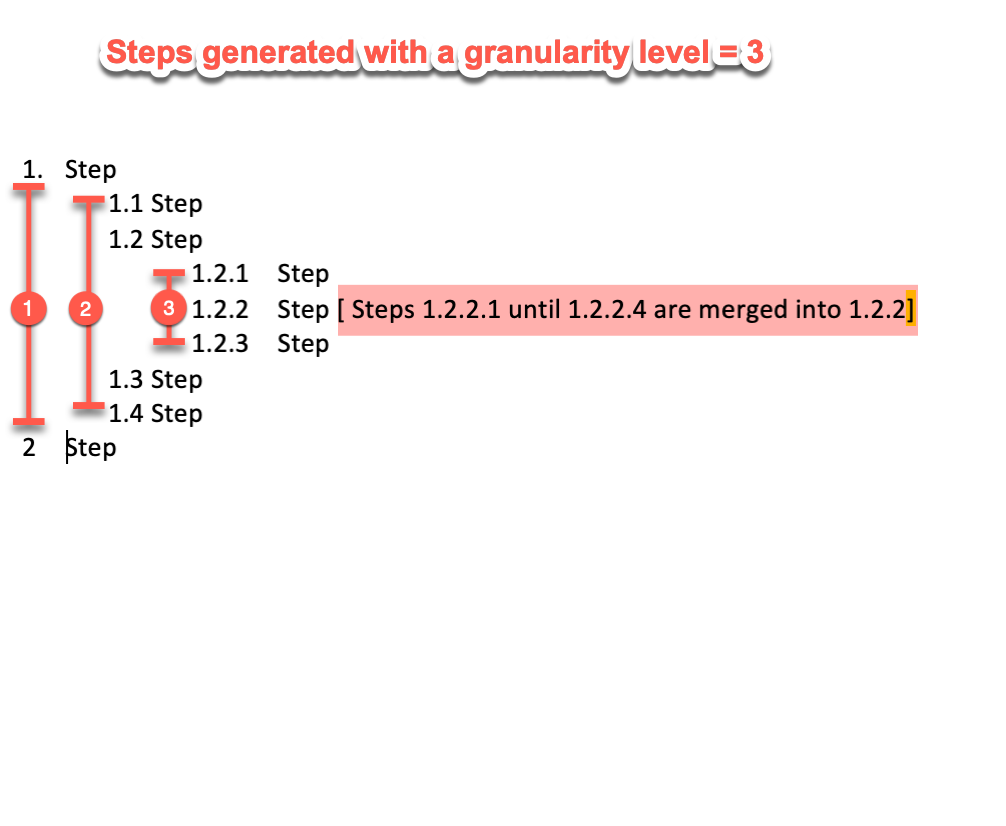
The granularity level of the Steps generation is available only for the Templates generated from Manuals of format SGML.
[Optional] Expand the section Options and check the Exact links to the referenced content option.
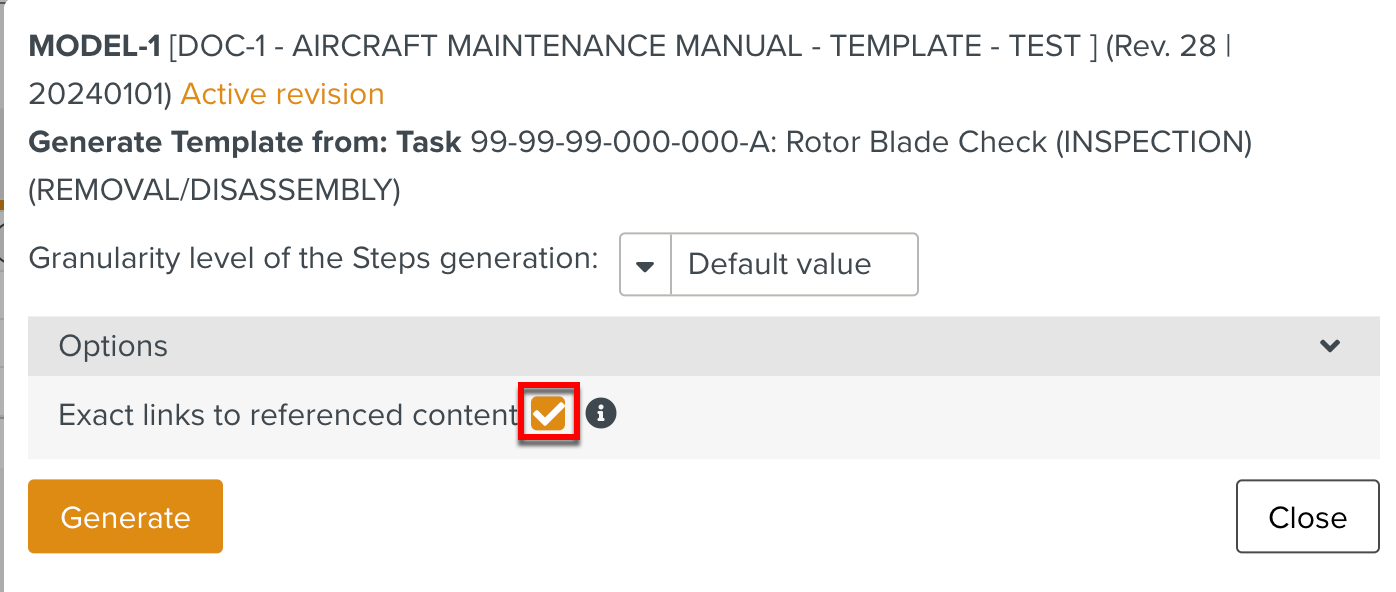
When the option is enabled, the links in the Template redirect you to the content in the original version of the Reference Manual.
If the option is not enabled, the links in the Template redirect you to the content in the latest version of the Reference Manual.
Click .
The Template is generated.
If multiple elements and sub-elements of the Reference Manual were selected to generate the Template, each element and sub-element is added as a different Step. The Steps are added to the Template in the order in which they were selected.
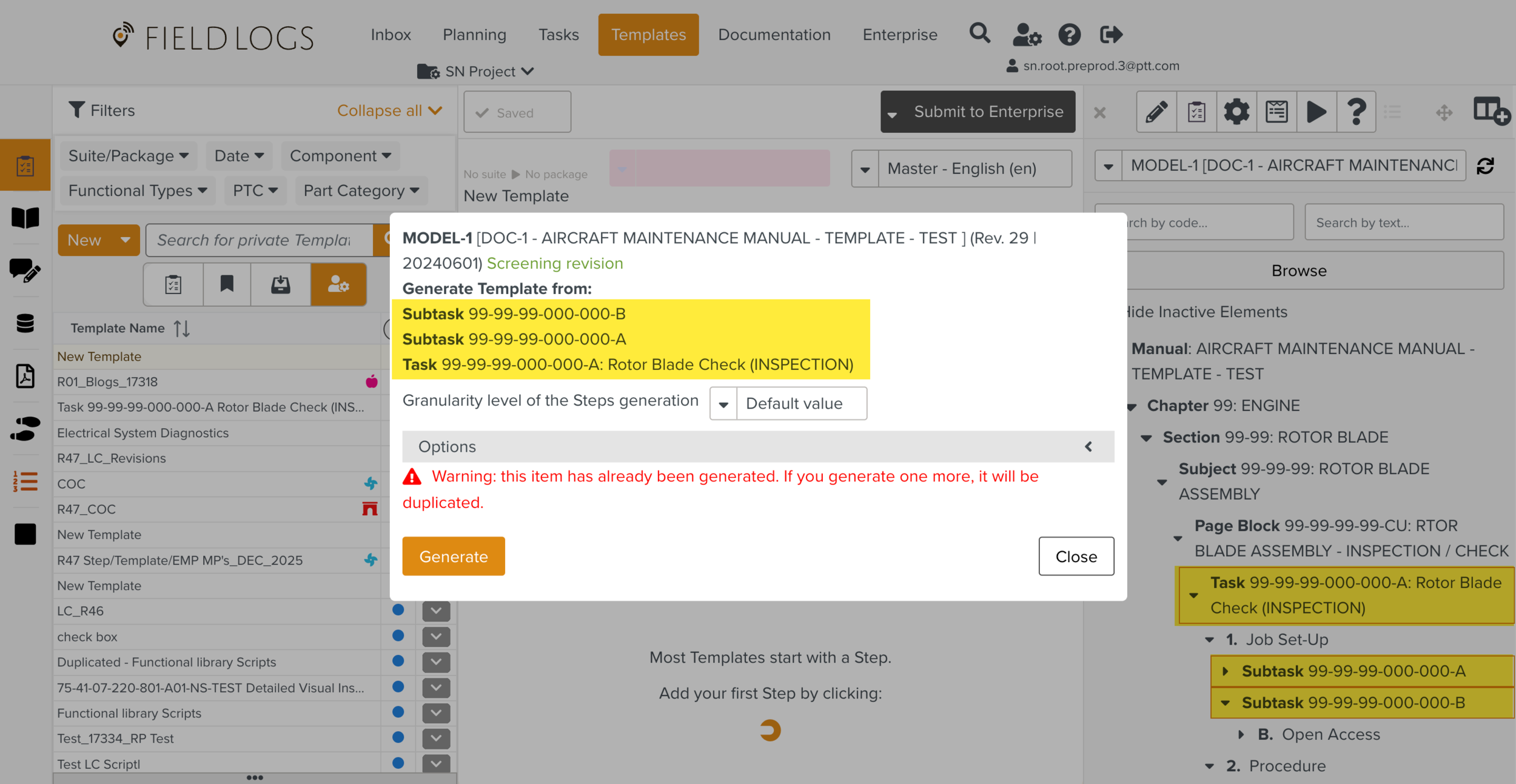
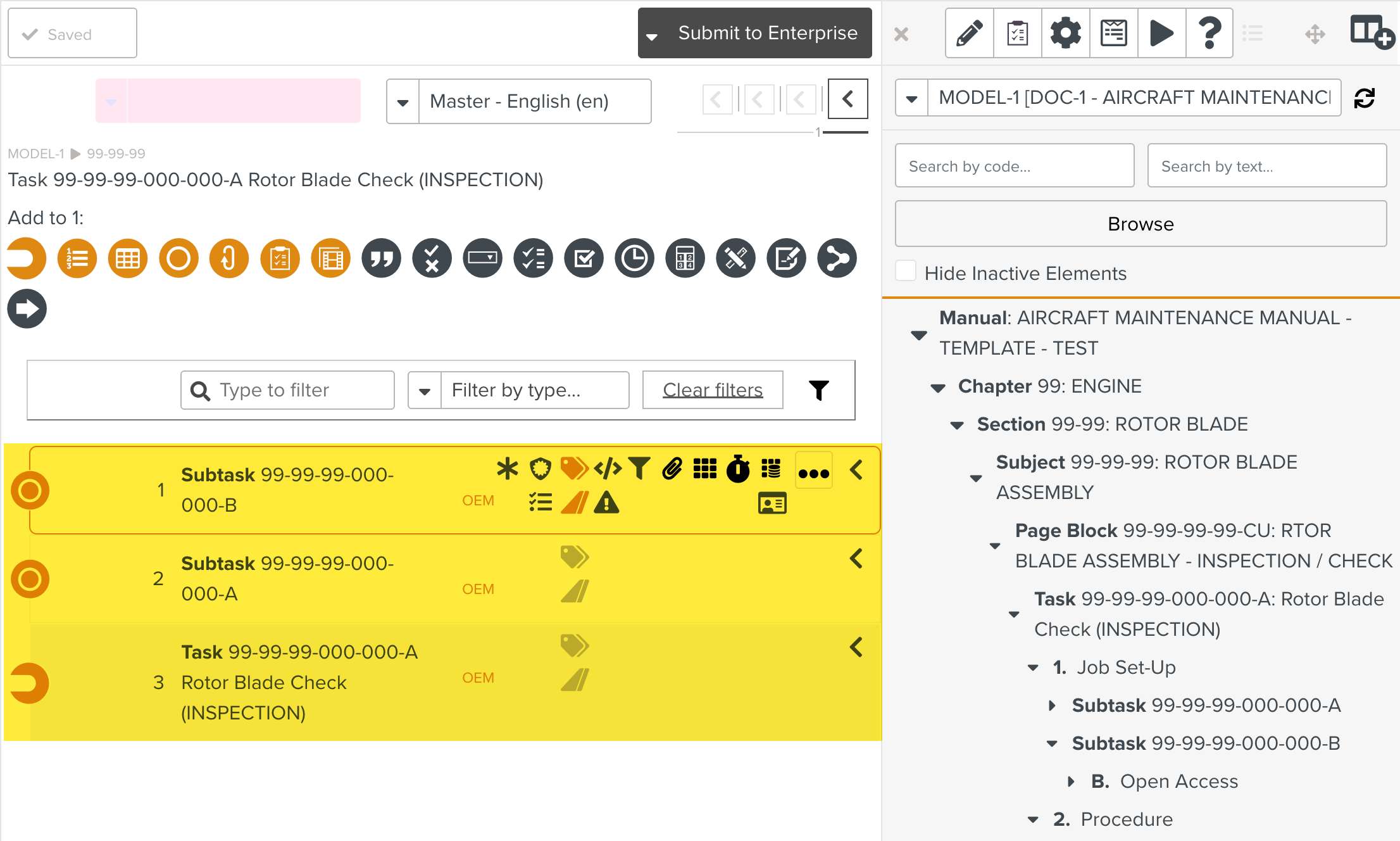
If an element and its sub-element are selected, the sub-element is added twice. It is added as both a child Step under the element Step and as an individual Step.
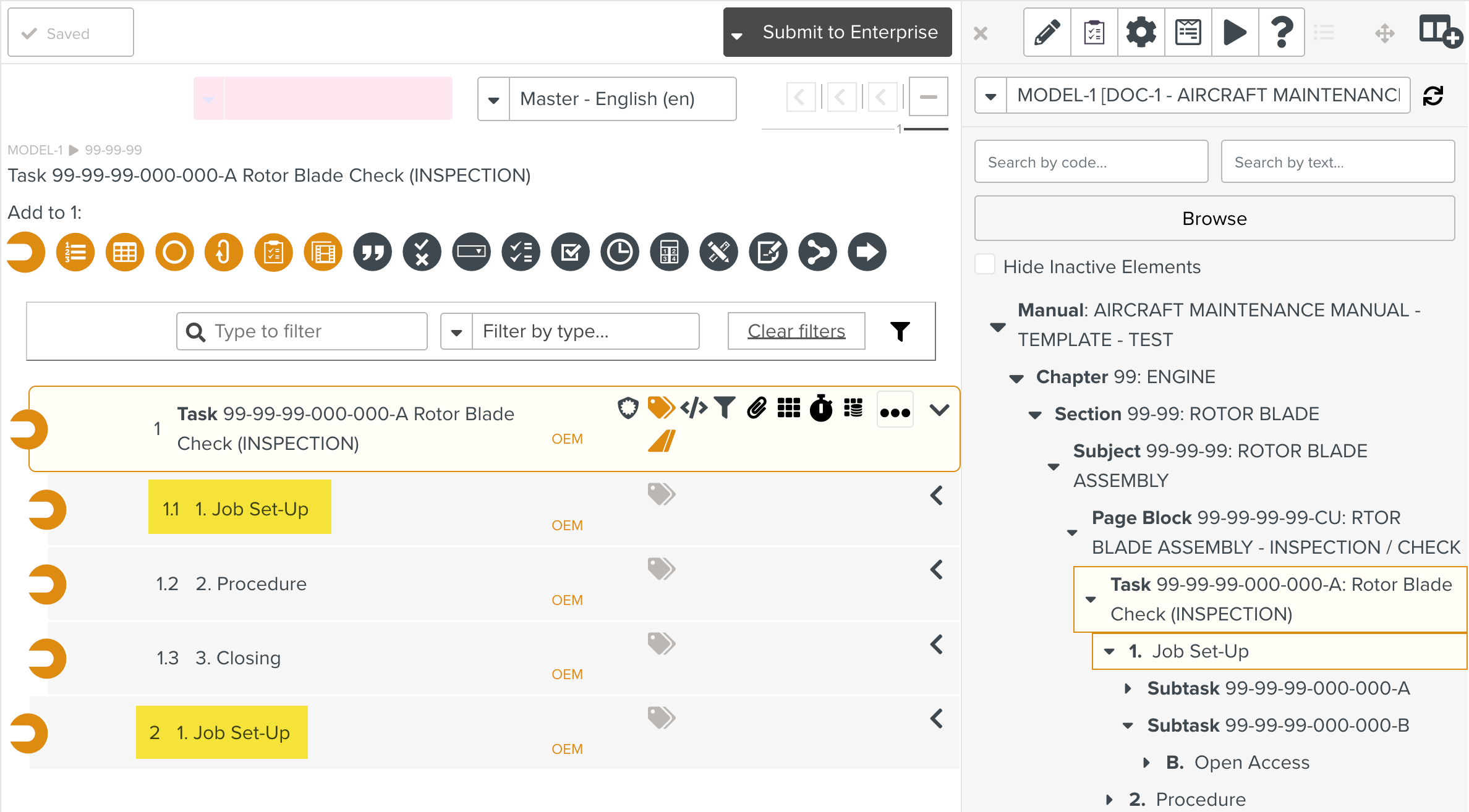
In the above example, the element Task 99-99-99-000-000-A and its sub-element 1. Job Set-Up are selected. When a Template is generated, they are added as separate Steps. The sub-element is added twice in the Template.
The Template Step 1 corresponds to Task 99-99-99-000-000-A. The Steps for 1. Job Set-Up are repeated twice in the Template - once as 1.1, a child Step and again as 2, an individual Step.
The Template has the details of the Reference Manual under the section of the as shown.
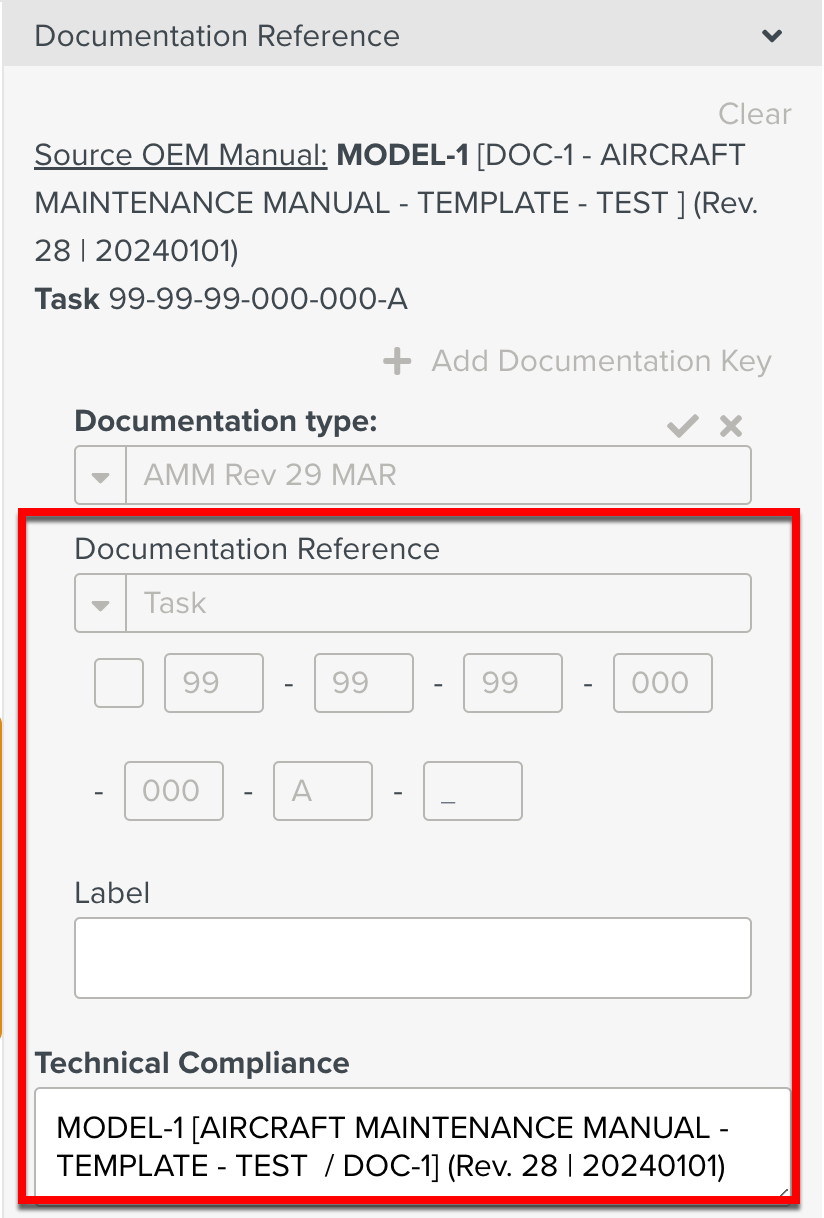
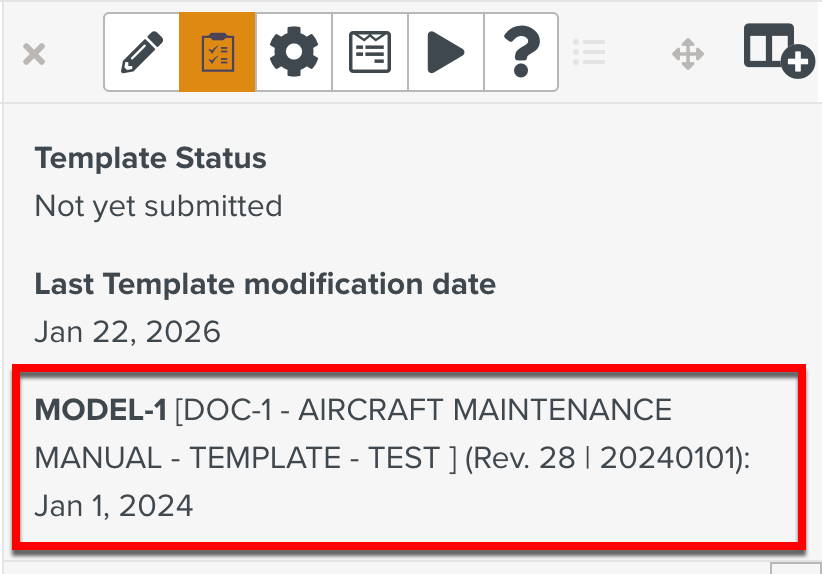
A list of all the versions of Manuals that are referenced in the Template are also displayed at the top of the Template Information Editor.
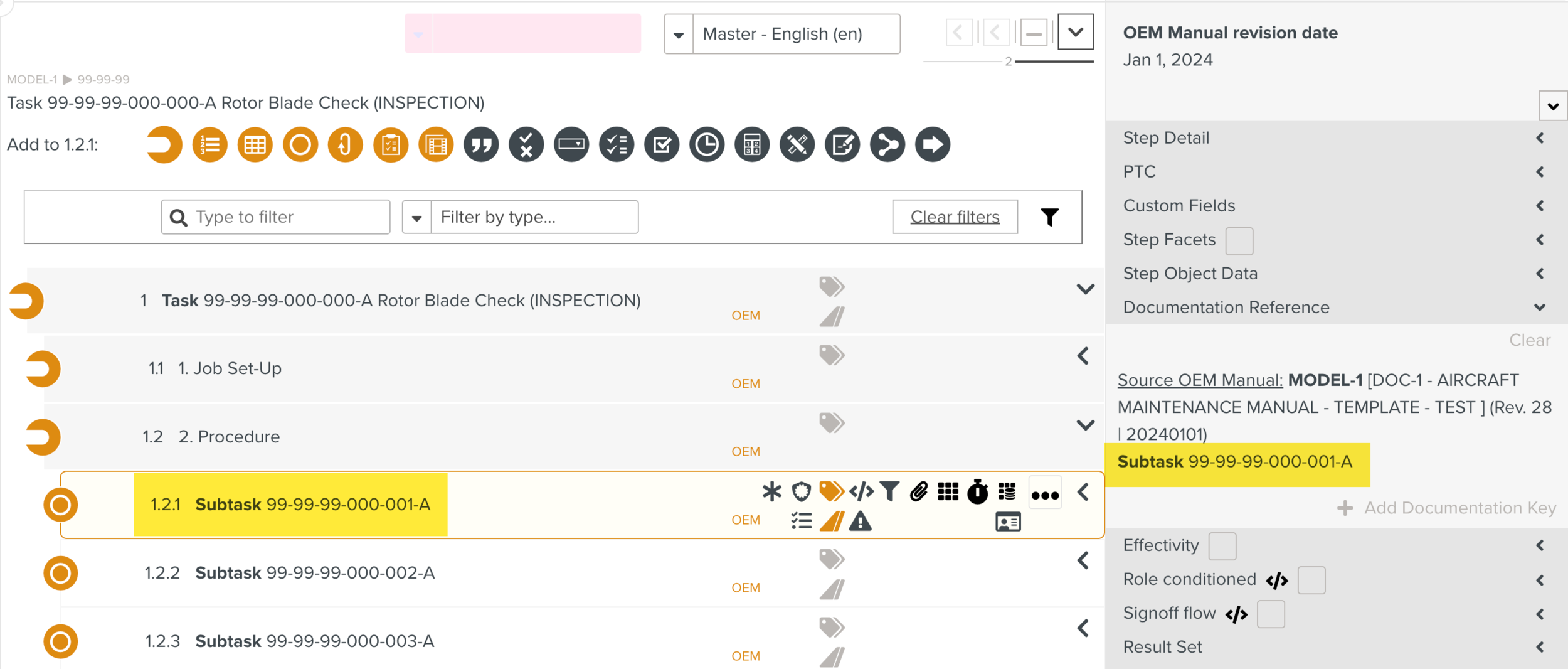
The Documentation References of the generated Template Steps reference the ATA key of the element from which they are generated.
In the below example, the Task has multiple Subtasks that are generated as Sub-Steps of the Task Step. The Documentation Reference of the Sub-Step reference the ATA key 99-99-99-000-001-A of the Subtask from which it was generated.
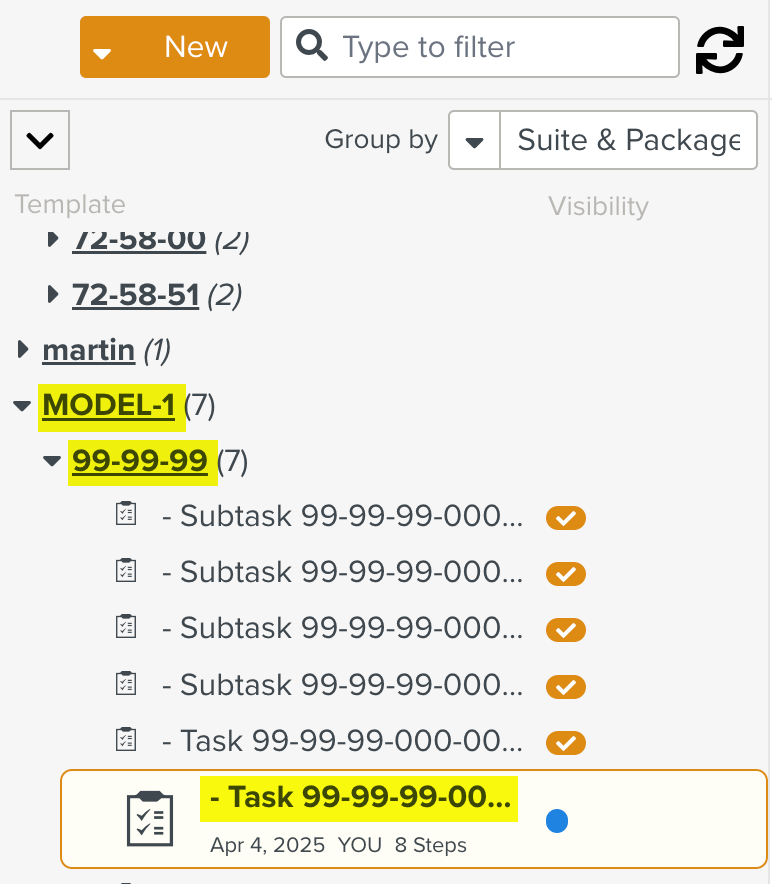
The Template appears in the Library Pane's Template list as a private Template within a Suite and Package that correspond to the Reference Manual.
Suite name – Name of the Reference Manual.
Package name – Number corresponding to the appropriate section / sub-section.
Template name – Name of the Page Block / Task / Sub-task.
You can update the Template based on the Impacts identified during the Screening process by initiating a new version of the Template.